Chapter-by-Chapter Dissertation Outline Template

EssayBoffin Team
Academic Service
Introduction
A dissertation is a long, complex document. Without a clear chapter structure, it's easy to get lost—and so is your reader. This template provides a proven framework for organizing your dissertation chapters, with examples from successful dissertations across disciplines.
Note
Standard Dissertation Structure
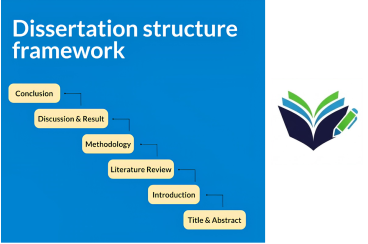
Most doctoral dissertations follow this pattern:
- Introduction/Chapter 1 – Establish context and significance
- Literature Review/Chapter 2 – Review existing research
- Methodology/Chapter 3 – Explain your approach
- Findings/Results/Chapters 4+ – Present your data
- Discussion/Final Chapter – Interpret results
- References – Cite all sources
Some programs vary (particularly engineering and sciences), but this is the most common structure.
Chapter 1: Introduction
Purpose
Establish the context, significance, and scope of your research. By the end, readers understand why your research matters.
Typical Outline
1.1 Opening Hook
- A compelling statistic, question, or scenario that establishes relevance
1.2 Background and Context
- Historical background or current state of the field
- Definitions of key terms
- Scope of the problem
1.3 Problem Statement
- The specific problem your research addresses
- Why this problem matters
1.4 Research Question(s)
- Your main research question
- Sub-questions that guide your investigation
1.5 Significance and Scope
- Who benefits from this research?
- What are the practical/theoretical implications?
- What will you cover and not cover?
1.6 Organization of the Dissertation
- Brief roadmap of remaining chapters
Example Length
5–15 pages depending on discipline
Chapter 2: Literature Review
Purpose
Demonstrate your command of existing research and identify the gap your dissertation fills.
Typical Outline
2.1 Conceptual Framework
- Define key concepts and theories
- Establish theoretical lens
2.2–2.X Thematic Sections
- Organize by themes, not chronology
- Synthesize across sources
- Critically evaluate
2.X Gaps in Existing Literature
- What's missing?
- How your research addresses these gaps
2.X Research Question Revisited
- Show how literature review informs your question
Example Length
20–40 pages for most disciplines
Key Principle
Chapter 3: Methodology
Purpose
Explain your research approach so readers can understand and evaluate your methods.
Typical Outline
3.1 Research Design
- Qualitative, quantitative, or mixed methods?
- Why this design for your question?
3.2 Participants/Subjects/Sample
- Who or what did you study?
- Sampling method and sample size
- Inclusion/exclusion criteria
3.3 Data Collection
- What methods? (surveys, interviews, experiments, etc.)
- Timeline
- Instruments used
3.4 Data Analysis
- How did you analyze the data?
- Software or tools used
- Coding schemes or statistical tests
3.5 Validity and Reliability
- How do you ensure your findings are trustworthy?
- Limitations of your approach
3.6 Ethical Considerations
- IRB approval or ethical review
- Informed consent procedures
- Confidentiality protections
Example Length
10–20 pages
Chapters 4+: Findings/Results
Purpose
Present your data clearly without interpretation (save that for Discussion).
Organization Options
Option A: By Research Question
- Chapter 4: Findings for RQ1
- Chapter 5: Findings for RQ2
- Chapter 6: Findings for RQ3
Option B: By Theme or Category
- Chapter 4: Theme A findings
- Chapter 5: Theme B findings
- Chapter 6: Theme C findings
Option C: By Chronology or Stage
- Chapter 4: Early-phase findings
- Chapter 5: Mid-phase findings
- Chapter 6: Late-phase findings
Typical Structure per Chapter
4.1 Introduction
- What this chapter covers
4.2–4.X Findings Sections
- Use tables, figures, and quotes effectively
- Organize logically
4.X Summary
- Brief recap of key findings
Example Length
20–50+ pages depending on data volume
Final Chapter: Discussion
Purpose
Interpret your findings, discuss their significance, and address limitations.
Typical Outline
Final.1 Summary of Findings
- Brief recap of main findings
Final.2 Interpretation of Findings
- What do results mean?
- How do they answer your research questions?
- Do they align with existing literature?
Final.3 Implications
- Theoretical implications
- Practical implications
- Implications for policy or practice
Final.4 Limitations
- Be honest about what you couldn't study
- How might limitations affect findings?
Final.5 Recommendations for Future Research
- What questions remain?
- What should researchers investigate next?
Final.6 Conclusion
- Final thoughts on significance
- Closing reflection
Example Length
10–20 pages
Planning Tips
Before You Start Writing
- Confirm chapter structure with your advisor
- Create an outline for each chapter
- Set page targets per chapter
- Plan your timeline (when each chapter is due)
- Identify key figures, tables, or visuals needed
- Establish consistent citation format
Common Pitfalls
- Weak Introduction – Doesn't clearly establish why this research matters
- Literature Review as Summary – Summarizes sources instead of synthesizing
- Methods Too Brief – Doesn't provide enough detail for readers to evaluate
- Results Buried in Narrative – Use tables and figures to highlight key findings
- Discussion Too Long – Avoid lengthy speculation; stick to your data
- Vague Limitations – Be specific about what you couldn't study
Pro Tip
Conclusion
A well-structured dissertation isn't just easier to write—it's easier to read and understand. Use this template as a starting point, then adapt based on your program requirements and disciplinary norms. Your advisor is your best resource for feedback as you develop your outline.
Need help planning your dissertation structure? EssayBoffin's dissertation coaches can help you outline and organize your work. Get dissertation support
Need academic writing support?
EssayBoffin provides expert editing, writing assistance, and research support for all academic levels.
Get Support